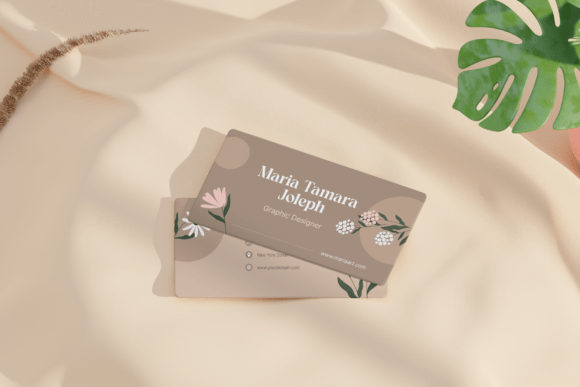
Elevating Brand Identity with the Business Card Leaf Shadow Mockup
Presenting a brand identity is about more than just showing a logo; it is about conveying a feeling. When you hold a business card, the texture of the paper, the weight in your hand, and the lighting around it all tell a story before a single word is read. This is where the Business Card Leaf Shadow Mockup becomes an invaluable tool for designers and entrepreneurs alike. Imagine a natural and serene scene where your card rests on a soft sandy surface, bathed in warm pastel tones. Organic leaf shadows dance across the design, creating an earthy aesthetic that instantly communicates wellness, sustainability, and a connection to nature.
For wellness brands, organic businesses, florists, and creative freelancers, this specific visual language is powerful. It moves beyond the sterile, white-background presentations that dominate the digital space and offers something tactile and alive. However, simply downloading a high-resolution file does not guarantee a stunning result. Many users overlook critical details when selecting and applying these mockups, leading to presentations that feel disjointed or unprofessional. By understanding common pitfalls and adopting a more strategic approach, you can ensure your brand identity shines exactly as intended.
Understanding the Aesthetic and Its Application
The core appeal of this mockup lies in its ability to ground a digital design in a physical reality. The combination of sand, soft light, and botanical shadows creates an atmosphere of calm and authenticity. This is particularly effective for eco-conscious business cards and natural lifestyle brand designs. When potential clients see your card in this setting, they subconsciously associate your brand with those organic qualities.
The technical specifications provided—such as the 4000 x 3000 pixel size and 300 dpi resolution—are designed to ensure crisp details whether viewed on a retina display or printed in a portfolio. The inclusion of smart object layers simplifies the workflow: you simply double-click the layer, place your design, and save. Yet, the ease of use can sometimes lead to complacency. Just because the process is automated does not mean the output will automatically look professional. The quality of the final image depends heavily on the quality of the source file you insert.
Common Mistakes That Dilute Your Presentation
One of the most frequent errors creators make is ignoring the lighting conditions of their original design. The Business Card Leaf Shadow Mockup features specific directional light casting those organic shadows. If your business card design includes flat, uniform colors or harsh, artificial drop shadows created in Illustrator or Photoshop, the final composite will look fake. The shadow from the leaves should interact with your design, not compete with a pre-existing shadow you added. To avoid this, always flatten your design and remove any internal effects before placing it into the smart object. Let the mockup's environment provide the depth.
Another overlooked detail is color management. The warm pastel tone of the sandy surface acts as a color filter. If your brand colors are cool blues or stark neons, they may appear muted or shifted when placed in this warm environment. Some users mistake this for a flaw in the mockup, when in reality, it is a physics-based interaction of light. Before finalizing, check your design in a neutral environment first. If the colors shift too drastically in the warm light, consider adjusting the saturation or temperature of your source file slightly to compensate, ensuring your brand remains recognizable.
Furthermore, many beginners neglect the importance of the bleed and safe zones. Even though the mockup is high resolution, if your design extends too close to the edge without proper bleed, the perspective warp applied by the smart object might reveal white gaps or cut off crucial text. Always ensure your artwork extends beyond the trim line. Additionally, remember that the stock images of the leaves and sand are part of the scene composition; do not attempt to isolate or move them unless you have advanced masking skills, as this often breaks the realism of the shadow cast.
Strategic Choices for Better Results
To maximize the impact of this tool, treat the mockup as a staging ground rather than just a container. Consider the narrative you are telling. If you are a florist, the leaf shadow reinforces your trade. If you are a yoga instructor, the serene sand evokes balance. However, if you are a tech startup specializing in cybersecurity, this specific earthy aesthetic might send mixed signals. Always align the mood of the mockup with the core values of your brand. Using a nature-themed presentation for a corporate law firm might confuse the audience, regardless of how beautiful the image looks.
When preparing your files, pay attention to the texture of the paper you are simulating. While the mockup provides the environmental texture (sand and leaves), the business card itself needs to look like it belongs there. If your design relies on heavy gloss or metallic foil effects, ensure your source file reflects that reflectivity. A matte design placed in a scene with high-contrast sunlight might look dull if not adjusted correctly. Use adjustment layers within the smart object to tweak brightness and contrast so the card sits naturally on the sand rather than floating above it.
Checklist Before You Finalize
Before you export your final presentation, run through a quick mental checklist to ensure quality and usability:
- Lighting Consistency: Does the direction of the light in your design match the shadow cast by the leaves? Remove any artificial shadows from your source file.
- Color Harmony: Do your brand colors complement the warm pastel tones of the sand, or do they clash? Adjust temperature if necessary.
- Resolution Integrity: Is your source design high enough resolution to withstand the 300 dpi output without pixelation when zoomed in?
- Context Relevance: Does the organic, wellness-focused vibe align with your specific industry and target audience?
- File Organization: Have you saved your PSD with clear layer names in case you need to swap the design later for social media variations?
It is also important to note what is not included. The help guide mentions that image stocks inside are not included for separate use, meaning you cannot extract the leaf or sand photos for other projects. Understanding these limitations prevents frustration and ensures you use the asset strictly as a presentation tool. The value lies in the compositing engine—the smart objects and the lighting setup—not in the raw assets themselves.
Ultimately, the goal is communication. A well-executed mockup bridges the gap between a digital file and a physical product. By avoiding the trap of "drag-and-drop" laziness and taking the time to adjust lighting, color, and context, you transform a simple template into a compelling brand story. Whether you are a hobbyist creating cards for a friend or a marketing agency pitching a major wellness client, the Business Card Leaf Shadow Mockup offers a sophisticated canvas. Treat it with the care it deserves, and your presentations will resonate with the clarity and serenity of the scene itself.