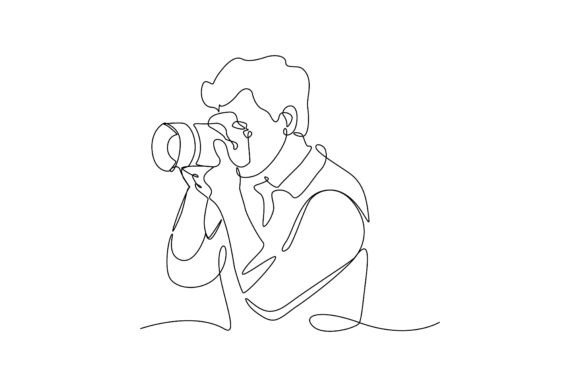
Minimalist One Line Art for Photographers
In the fast-paced world of visual communication, nothing captures attention quite like the refined simplicity of Photographer One Line Art. This distinctive style strips away unnecessary details to reveal the pure essence of a subject, creating an immediate emotional connection with the viewer. For designers and brand strategists, this approach offers a powerful tool to convey sophistication and creativity without visual clutter.
At its core, this design trend utilizes a continuous, unbroken stroke to depict complex scenes, such as a professional capturing a moment with a DSLR camera. The result is a fluid, elegant silhouette that feels both modern and timeless. When applied to brand identity, this minimalist vector illustration signals a focus on precision and artistic vision. It suggests that the brand values clarity and purpose, qualities that resonate deeply with clients seeking high-end services.
Elevating Brand Identity Through Simplicity
Integrating a one-line aesthetic into your logo design can dramatically improve brand recall. Unlike intricate emblems that may lose definition when scaled down, a single continuous line maintains its integrity across all mediums. Whether it is stamped on a business card or displayed on a massive billboard, the visual hierarchy remains strong and legible.
This style is particularly effective for photography studios looking to differentiate themselves in a saturated market. By adopting a Photographer One Line Art Vector Illustration, you create a unique visual signature that stands apart from generic stock imagery. The fluidity of the line mimics the motion of taking a photo, subtly reinforcing the dynamic nature of the profession while maintaining a clean, professional presentation.
Versatile Applications Across Media
The true power of these creative assets lies in their adaptability. A well-crafted vector file serves as the foundation for a cohesive design workflow, ensuring consistency across various touchpoints. Here are several ways to leverage this style effectively:
- Branding and Logo Design: Use the illustration as a primary mark or a secondary icon to establish a sophisticated tone.
- Social Media Graphics: The clean lines pop against colorful backgrounds, making them ideal for Instagram stories or LinkedIn headers.
- Web and UI Design: Incorporate the art into hero sections or loading screens to enhance user experience with lightweight, scalable graphics.
- Packaging Design: Print the outline on camera straps, lens caps, or portfolio boxes for a premium unboxing experience.
- Editorial Layouts: Use the vectors to break up text in magazines or digital brochures, adding visual interest without distracting from the content.
Technical Considerations for Designers
When selecting assets for your projects, prioritize file formats that offer maximum flexibility. Formats like EPS, AI, and SVG are essential for maintaining crisp edges at any size, which is critical for print design and large-format advertising. While raster formats like PNG and JPG are useful for quick web deployment, vector files allow you to manipulate stroke weights and adjust the composition to fit specific layout constraints.
Color palette selection also plays a pivotal role in maximizing the impact of one-line art. While black and white offers a classic, high-contrast look, experimenting with monochromatic schemes or gradient fills can inject modern energy into the design. However, always ensure that the chosen colors align with existing brand systems to maintain visual cohesion. The goal is to enhance the narrative, not overpower it.
Furthermore, consider the context in which the art will appear. In digital marketing, where users scan content rapidly, a simple, recognizable shape processes faster in the brain than a detailed photograph. This cognitive ease improves engagement rates and helps guide the user's eye toward key calls to action. For UX design, these illustrations can serve as friendly, approachable icons that reduce interface friction.
Final Thoughts on Visual Strategy
Ultimately, the choice to use continuous line art is a strategic decision to prioritize elegance and clarity. It reflects a commitment to quality and a deep understanding of modern aesthetics. By integrating these thoughtful design elements into your creative projects, you not only elevate the visual appeal but also strengthen the overall communication strategy. Quality assets do more than look good; they tell a story, build trust, and leave a lasting impression on your audience.